
Everything in this part of the toolbox needs to be read and all the tasks completed before you attend the first online workshop with Fiona’s team. If you need help, we suggest you talk to your line manager or drop Fiona an email [email protected].
VALUES
The concept of personal values is both complex and simple. Complex because these values are likely to have started in our family of origin and have been developed by our life experiences and core beliefs. Simple because it is easy to see how values drive our behaviour.
The beliefs of parents and parental figures shape the early development of our values. These beliefs can be social, political, religious and moral and will be impacted by place, education and social standing. The subsequent values are likely to be how we approached the world and made judgements about good/bad, right and wrong, appropriate and not appropriate. These beliefs and values form our attitude and how we think about people, places and situations.
As we grow and develop, and are exposed to wider influences and experiences, our beliefs, values and attitudes change. As adults, we have beliefs, values and attitudes that are developed independently of those of our parents and parental figures, as well as those we choose to keep from those early influences.
People care about values. Some care a lot and will actually decide who they work for and why based on the value proposition and how an organisation measures up to its professed values.
A 2018 survey by LinkedIn found that values are the number one priority for employees. Just under two thirds (71%) would take a pay cut to work for a company that has shared values and a mission they believe in and 39% would leave their current job if their employer asked them to do something that conflicted with their own morals or ethics. Almost half (47%) want to work in an environment where they can be themselves and have a positive effect on society (46%).
NHSSC have co-created a new set of values as part of the groundwork for a complete values refresh. In July 2025, based on the information provided by over 800 people in the organisation, the universal values and behaviours were agreed.
These are TRUST, COMMUNITY and AUTHENTICITY.
What could this mean on your best day living the values?
TRUST ‘BEST DAY’
I fully trusted others and felt trusted; respect, empowerment and collaboration were strong.
COMMUNITY ‘BEST DAY’
I felt deeply connected to something bigger; accountable and valued for my contribution.
AUTHENTICITY ‘BEST DAY’
I was honest, clear and kind in my interactions, remaining calm even in challenging situations.
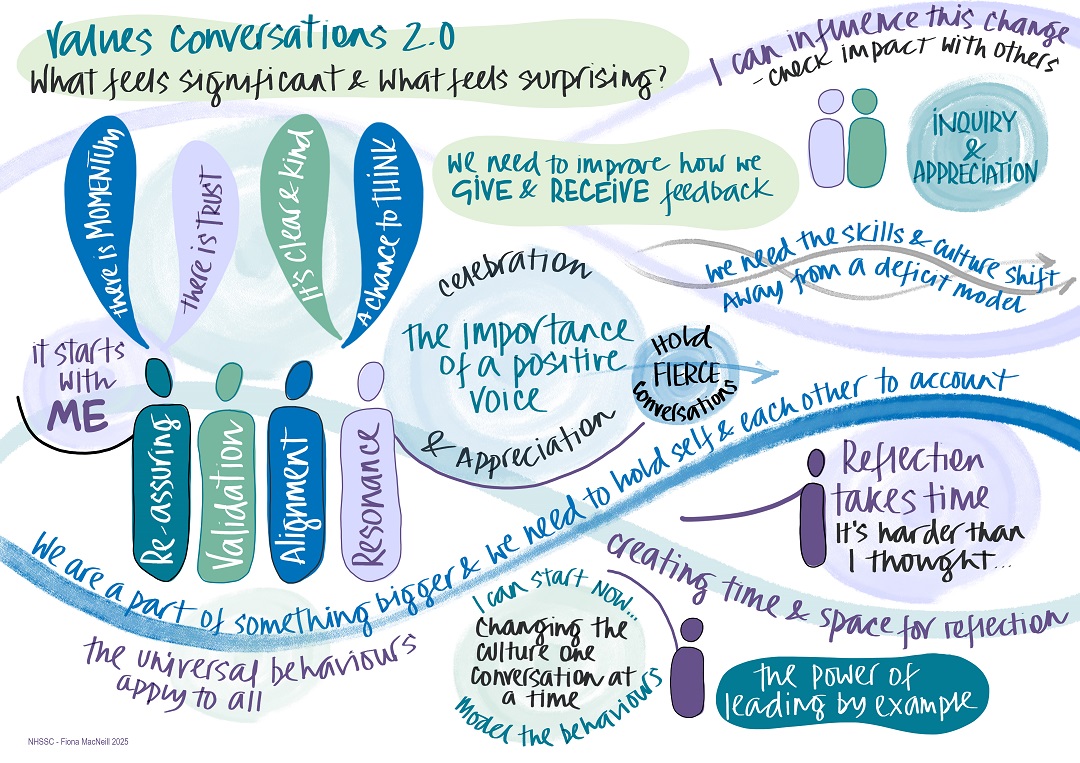
In September 2025, 150 people from across levels and directorates within NHSSC
attended a series of conversations which resulted in this graphic capture.
Listen to Fiona talking about values
VALUES WORK TO COMPLETE BEFORE THE ONLINE WORKSHOP 1
Before you come to the online Workshop 1, please download and complete the self-assessment in the tab below. This will help you to think about how you currently ‘show-up’ around the Values and Behaviours.
This should take you about 45 minutes to complete. Feel free to talk to colleagues about how they are getting on with the task, it’s not a test, it’s just trying to get you to think about how the new NHS Supply Chain Values and Behaviours relate to you in your role.
STRENGTHS
Listen to Andy talking about Strengths.
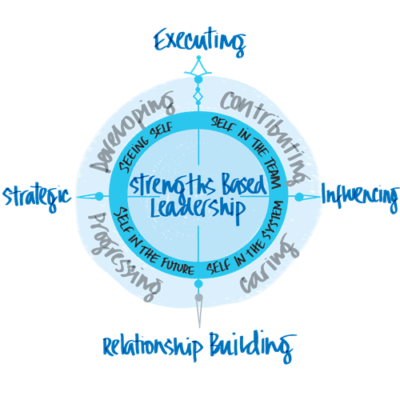
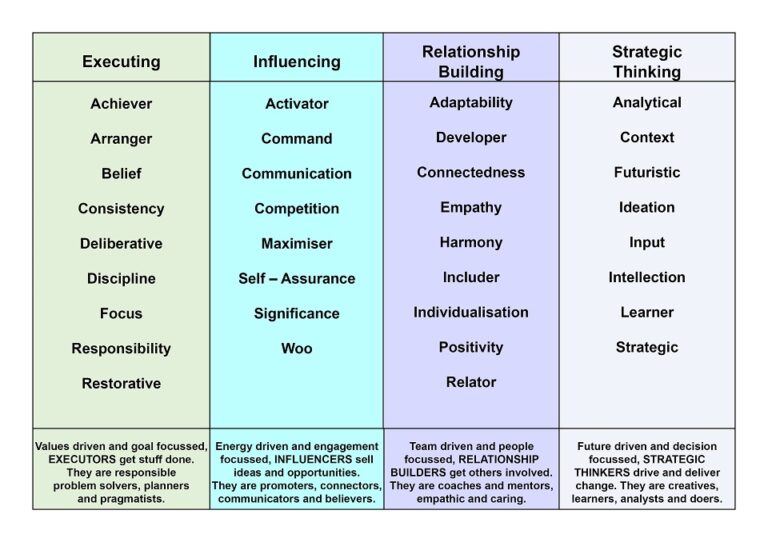
Gallup Strengths, also known as Clifton Strengths Finder, are 34 talent themes identified by an online assessment that uncover an individual’s natural patterns of thought, feeling, and behaviour. These are categorised into four domains: Executing, Influencing, Relationship Building, and Strategic Thinking. The assessment helps people understand their innate abilities to develop their greatest talents into strengths for professional and personal growth.
What the assessment does:
Identifies natural talents
The assessment identifies your top talent themes based on your answers to paired statements about yourself. Talent is defined as a naturally recurring pattern of thought, feeling, or behaviour that can be productively applied.
Focuses on strengths
Unlike traditional assessments that focus on weaknesses, Gallup Strengths emphasizes your natural abilities, with the goal of using them to achieve greater success.
Offers actionable insights
The results help you understand what you naturally do best and how to develop your greatest talents into strengths, providing a roadmap for accomplishments in your career and personal life.
For you to work effectively through this section of tools the people you are working with will need to have completed the above assessment from the book “How Full is Your Bucket”.
STRENGTHS WORK TO COMPLETE BEFORE THE ONLINE WORKSHOP 1
Before you come to the online Workshop 1, please read the book ‘How Full is Your Bucket’ this is a simple read and generally takes around 45-90 minutes.
This is not available as a full audio book; however, you can listen to a 20-minute summary here.
You are also required to complete an online strengths assessment and upload these to a strengths accumulator further down this page. The short video below gives a snapshot of how the assessment was developed.
TAKING THE STRENGTHS ASSESSMENT
At the back of the book ‘How Full is Your Bucket’ you will find an orange envelope, inside there is a code. This code allows you to access the Clifton Strengths Finder. The assessment will provide you with a report of your top 5 strengths.
Over 280 line managers have already uploaded their Strengths to a Strengths Accumulator. By October 2026, we will be able to see the Strengths for each team across the NHS Supply Chain. This will transform 1-1s, performance and development conversations and should impact your wellbeing and self-motivation.
The short video below gives a snapshot of how the Clifton Strengths Finder was developed.
These may fall across the 4 domains shown below, only be in one domain or be across one or two – the assessment is unique to you and there are no right or wrong answers.
- Executing: People with strengths in this key domain know how to rally around a goal and get things done. Differing strengths might dictate the style of getting to the goal, but people who have strengths in this area make a massive contribution to things happening.
- Influencing: People with strengths in this key domain know how to share and embed the team’s ideas both inside and outside the organisation. These people are natural persuaders, inspire others to adopt their ideas and are vital to moving teams forward in communities.
- Relationship Building: Those with strengths in this domain tend to keep groups together. They’re the social glue: the mortar between the foundation building blocks. They know how to create and maintain groups such that the whole is much greater than its parts.
- Strategic Thinking: People with strengths in this domain tend to force the group to look at the big picture and toward the future – what might be. Always reviewing the data and applying what they learn, strategic thinkers move the organisation forward – stretching its members to think beyond what, to the possibilities of the future.
CONNECTING YOUR STRENGTHS TO VALUES
Mapping Values, Behaviours & Strengths
The alignment of Clifton Strengths with organisational values and behaviours provides a powerful framework for understanding and leveraging individual and collective talent. By understanding this mapping and clarifying the distinction between primary and supporting strengths, the organisation can create a more inclusive, resilient, and high-performing culture ensuring that strengths and values work together to drive organisational success.